 EN
EN
EN
EN
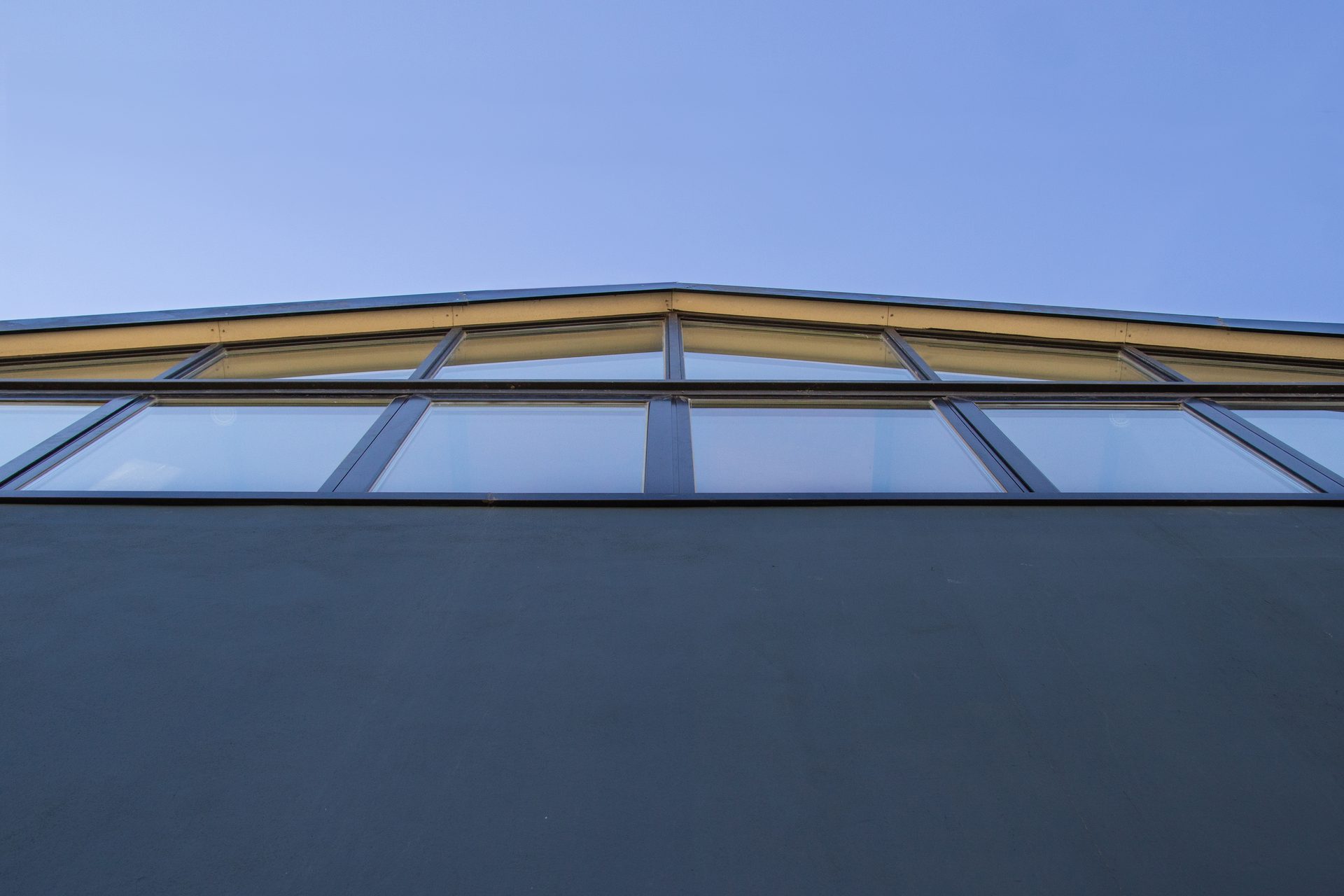
"Despertar emociones en la gente que vive en los espacios que creamos, estar consciente de su experiencia, comprender la verdadera naturaleza de las cosas"
RCR Arquitectos, discurso Pritzker 2017.Descifrar la naturaleza de una casa es entender su esencia en relación directa a los deseos del habitante.
Entender la técnica y la estética como un par indisociable, que se retroalimentan para conformar la esencia del proyecto.
La Casa Porta busca manifestar una forma de entender la vivienda como un contenedor e impulsor de experiencias
La búsqueda se basa en el promover el diálogo con el exterior, la introspección, el contacto con la naturaleza, la interacción entre otras personas, el aprovechamiento del paisaje. La flexibilidad y calidad de los espacios, la nobleza de la técnica y los materiales posibilitan dicha búsqueda.
El desafío radica en la construcción de una vivienda en un lote de reducidas dimensiones, en esquina
El proyecto consta de dos requerimientos principales, preservar al máximo la privacidad de la casa hacia la calle y obtener la mejor relación de los ambientes con el exterior.
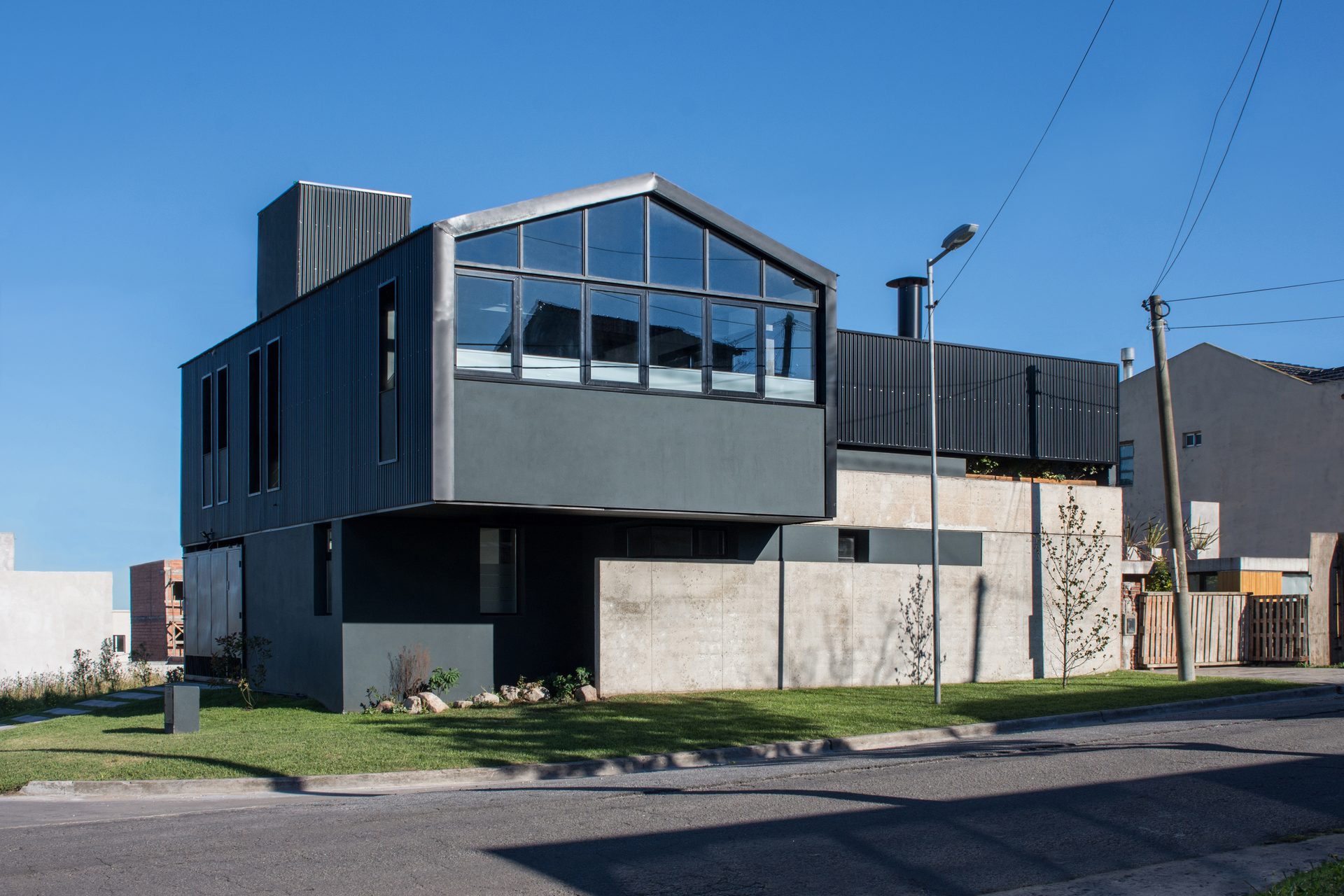
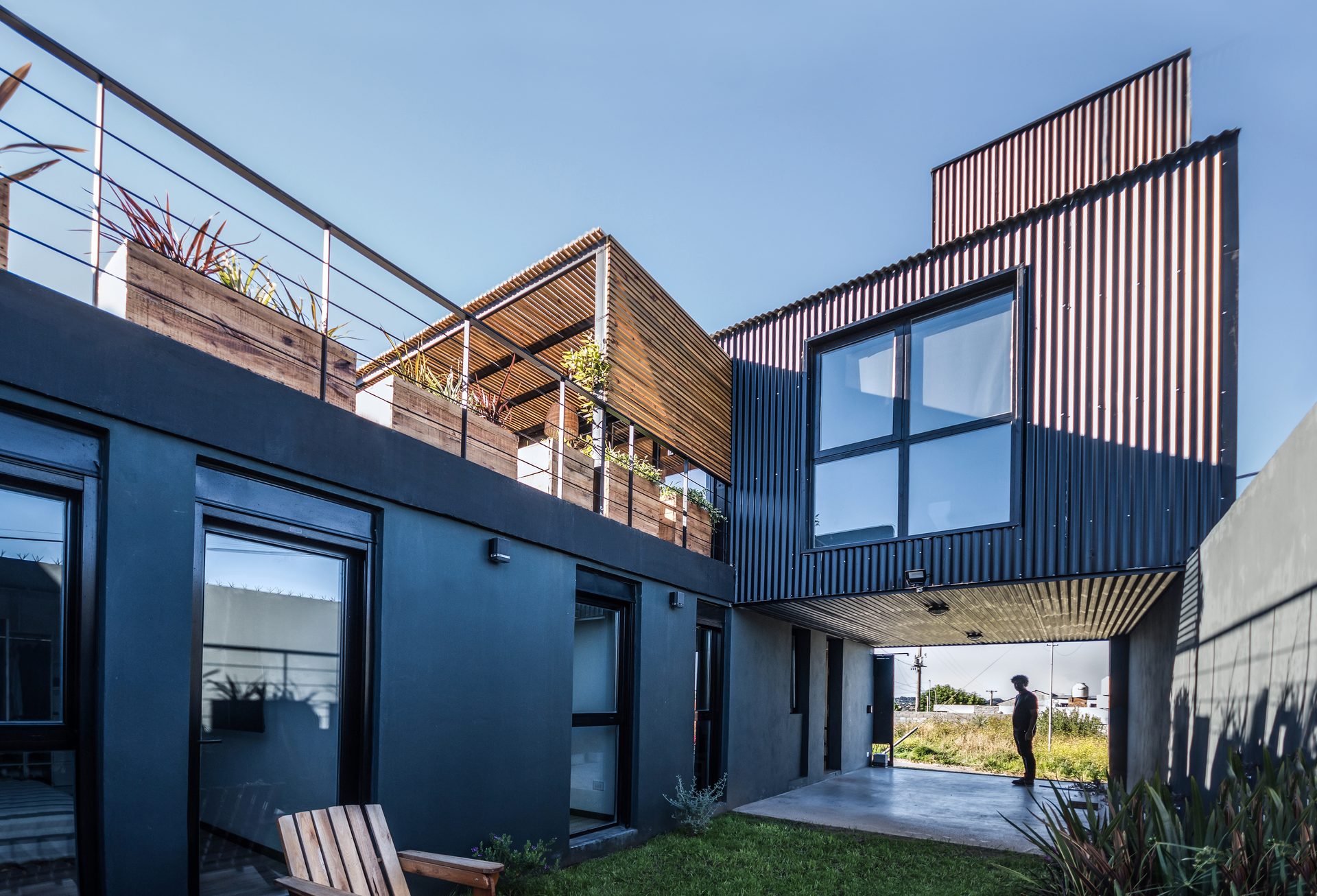
Busca obtener el máximo de privacidad en la planta baja, donde se disponen los dormitorios y la expansión de los mismos, conformando así un basamento que delimita la totalidad del lote y deja en su interior un patio.
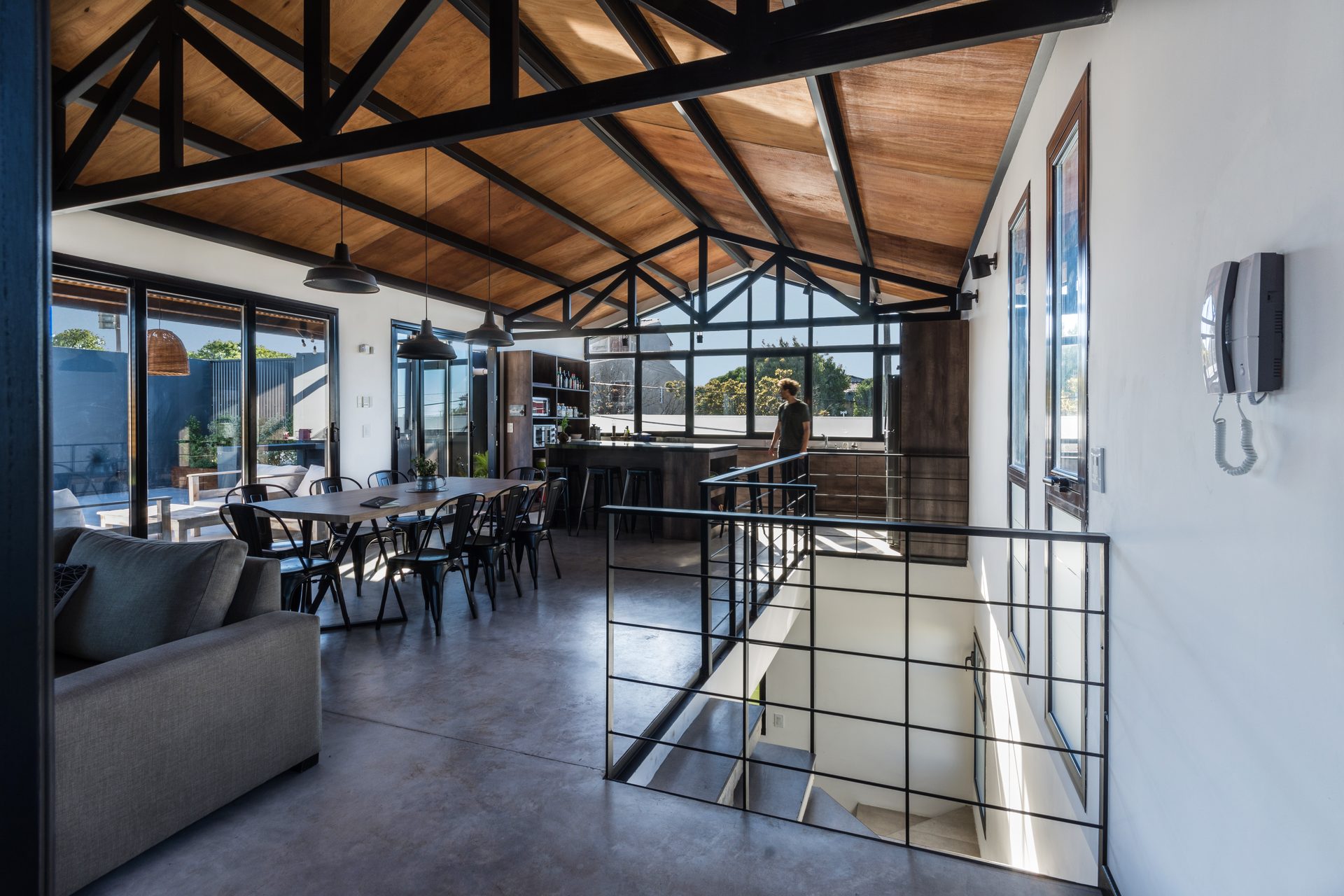
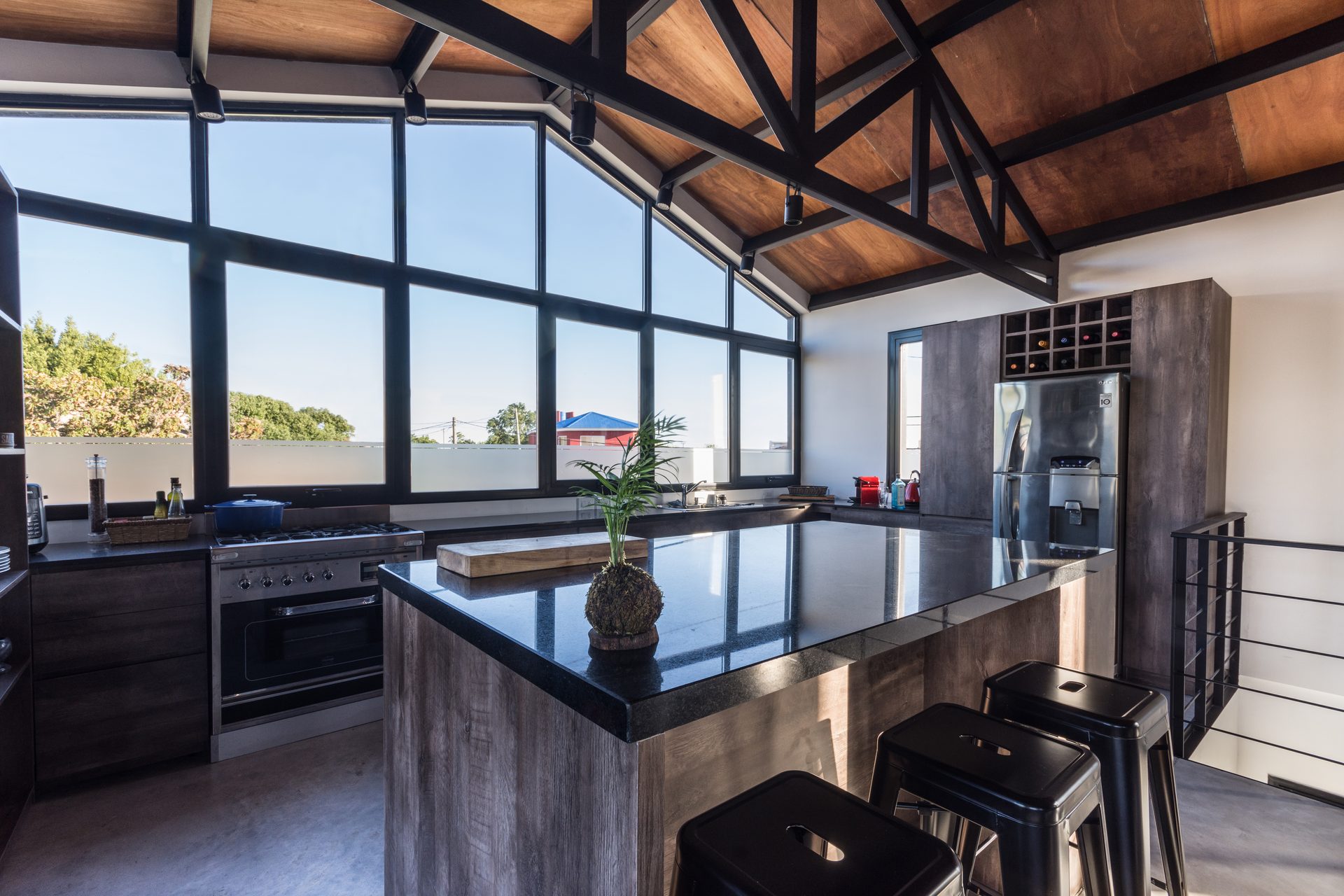
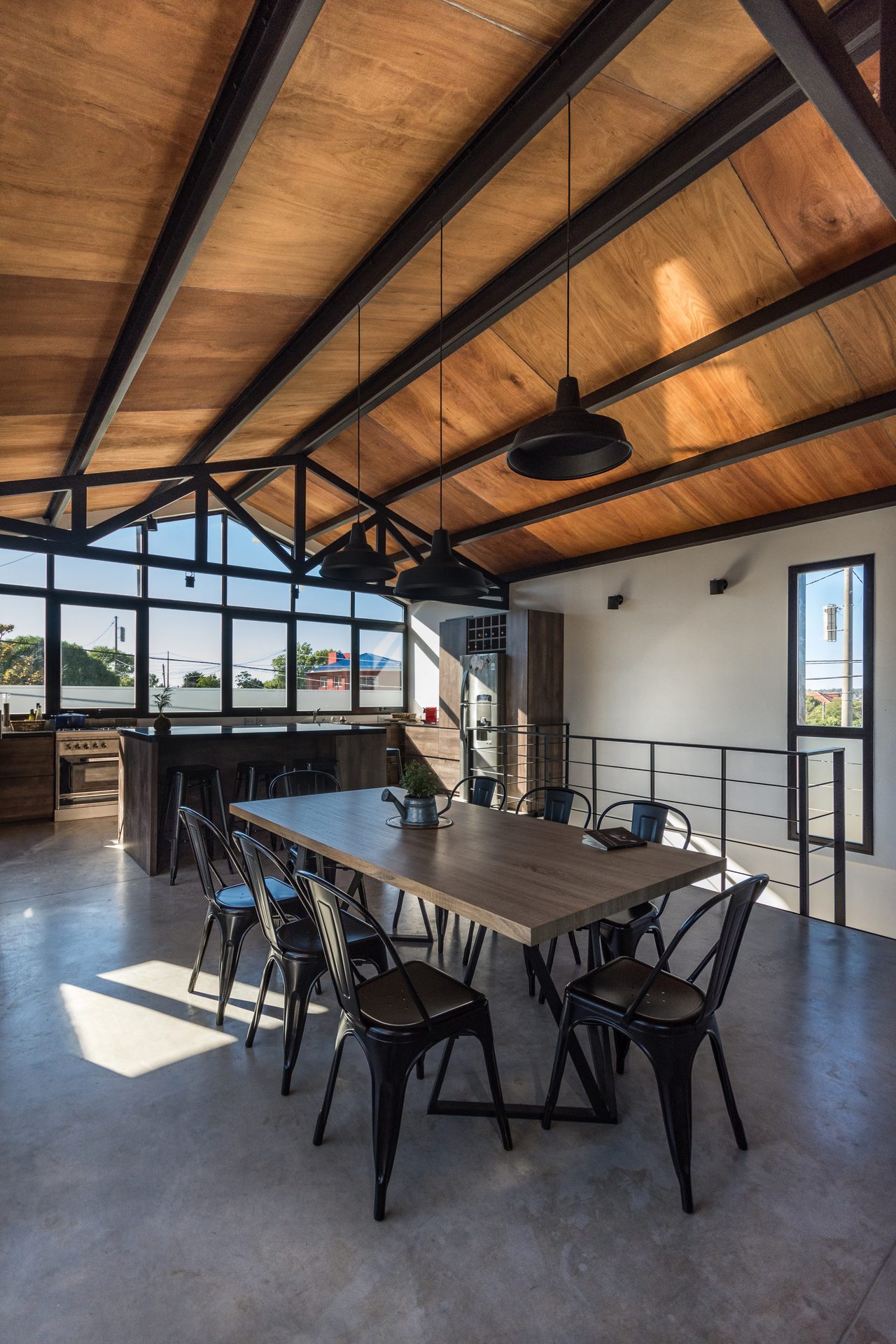
Al elevar las áreas públicas de la vivienda se obtiene un gran contenedor espacios flexibles con buena iluminación, ventilación, asoleamiento y visuales extensas hacia la ciudad.
El basamento posee un límite variable que conjuga la opacidad en el área de los dormitorios y el acceso, con la tridimensionalidad y permeabilidad en la esquina, donde se encuentran la escalera, el hall de acceso y un pequeño patio.
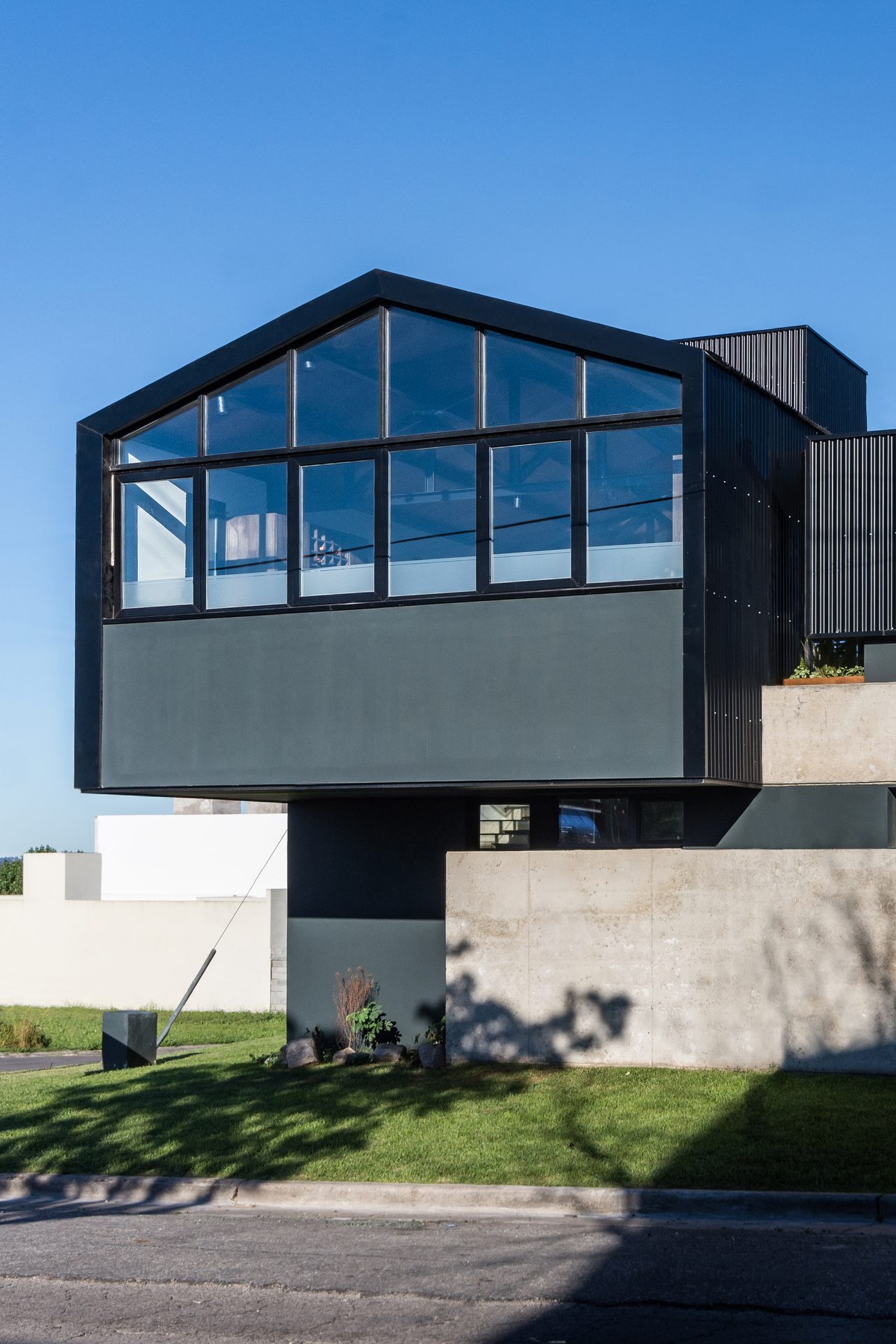
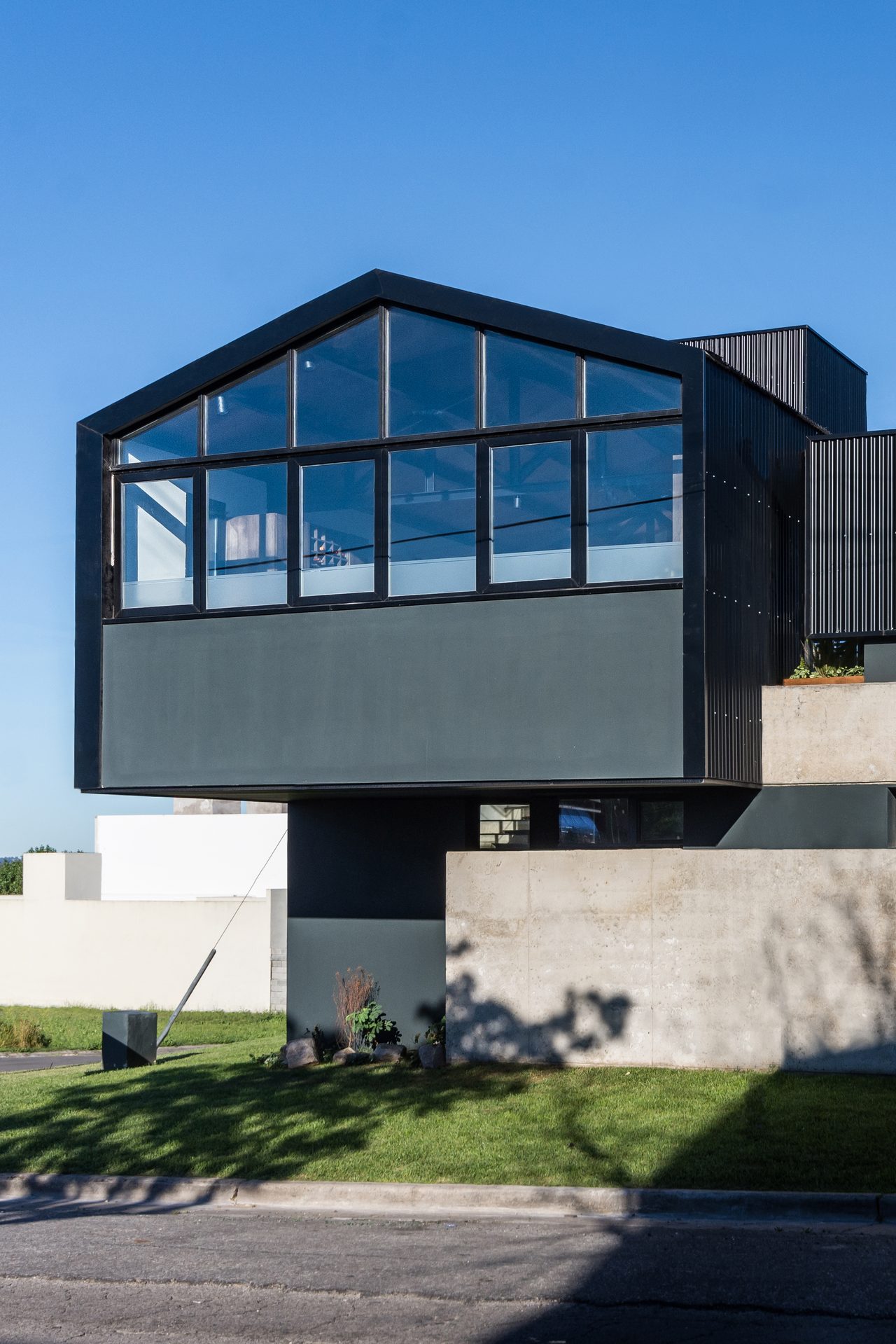
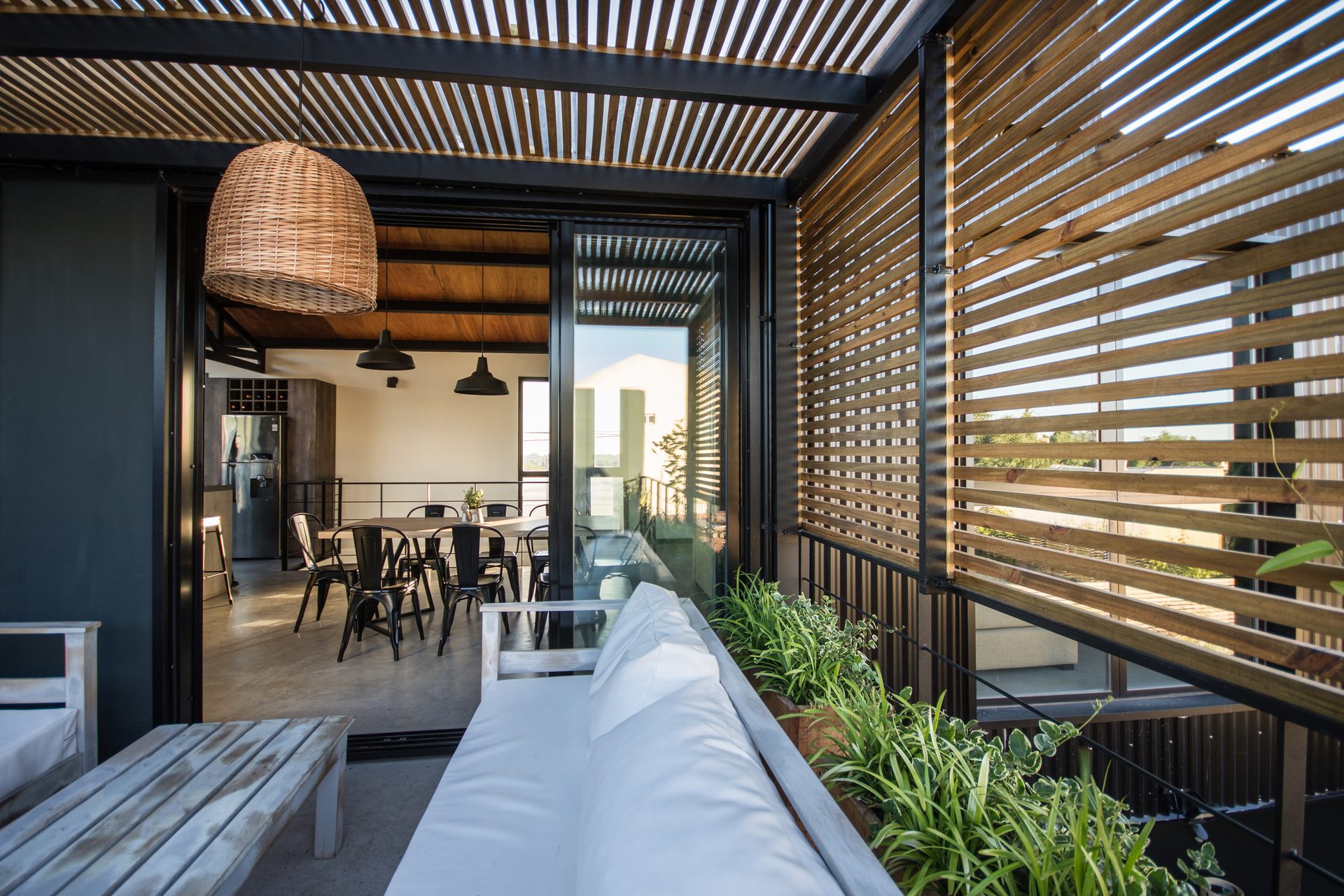
En la planta alta se disponen las áreas públicas de la casa. Un volumen liviano, revestido íntegramente en chapa, contiene la cocina y el estar comedor.
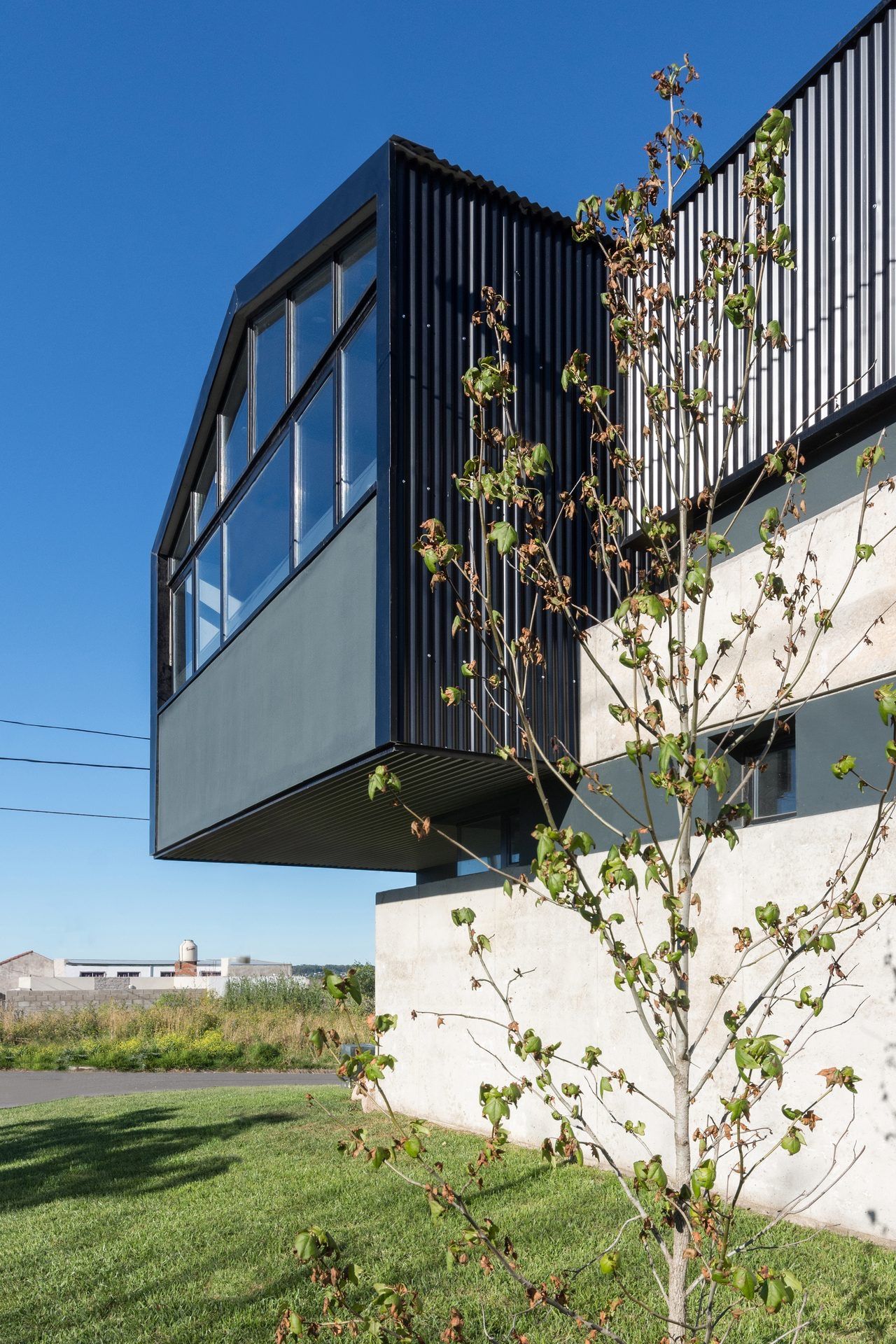
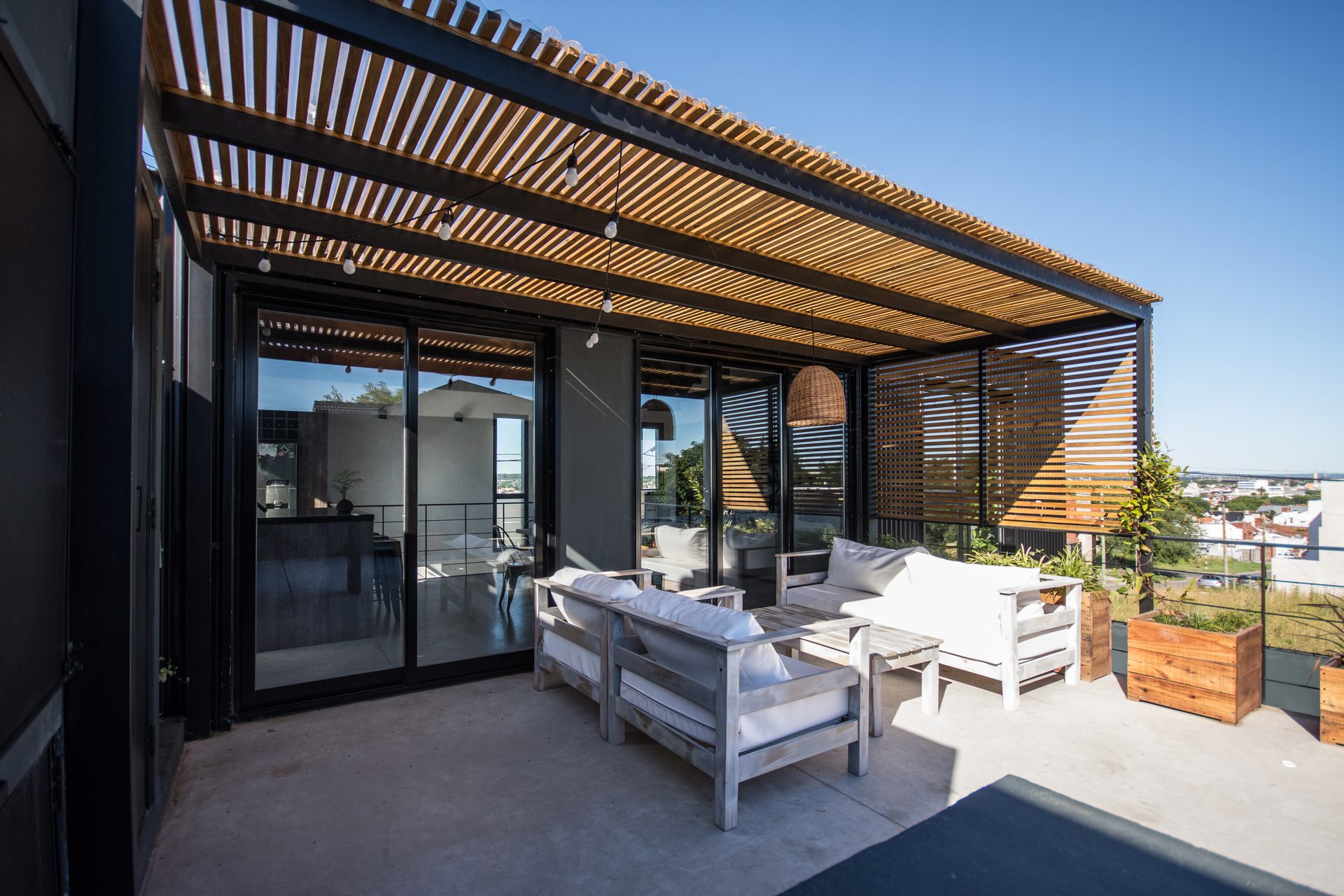
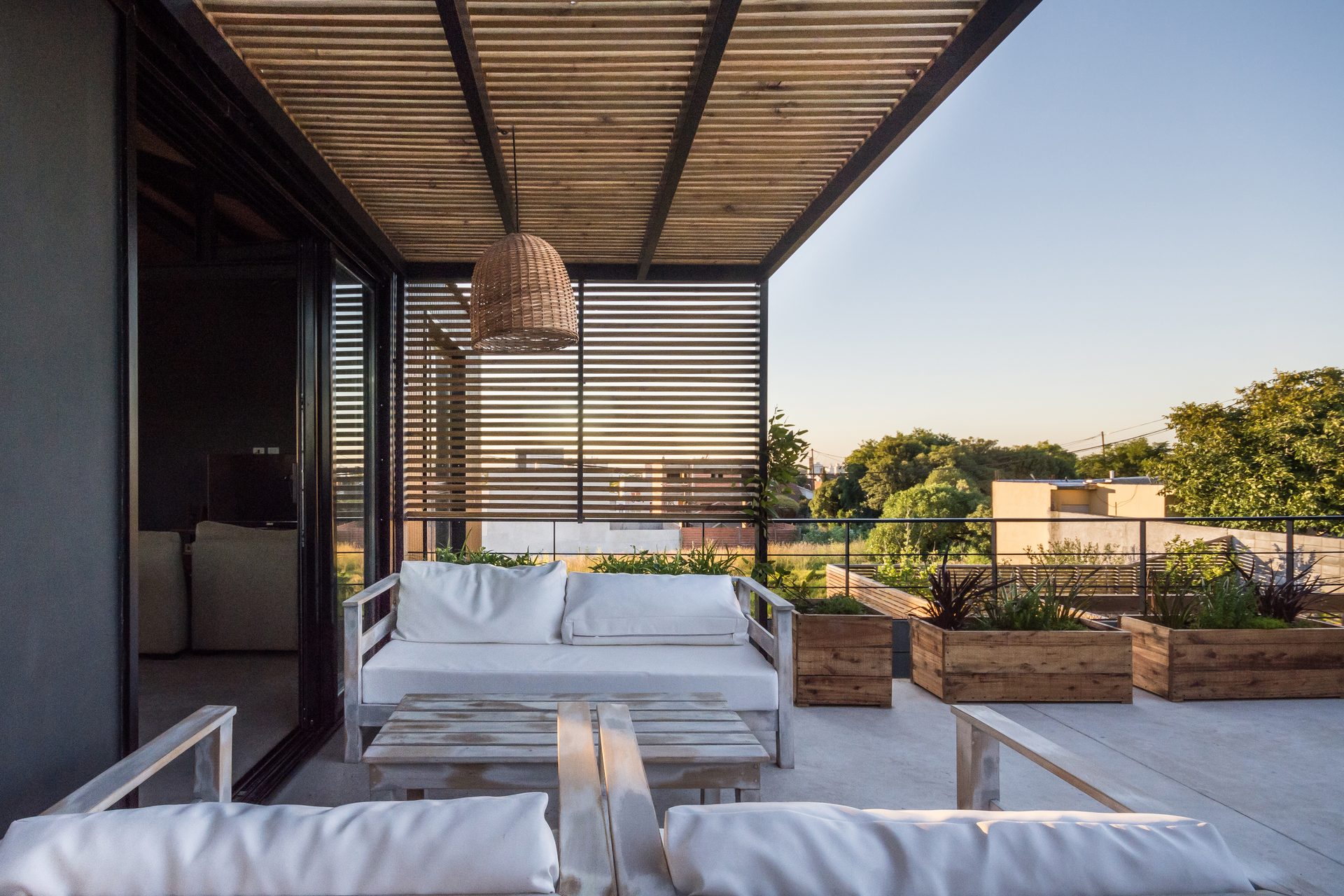
El prisma emerge sobre la línea municipal, generando un semicubierto sobre ella y a su vez se perfora, desmaterializando su límite, buscando dialogar a partir de las visuales entre la casa y la calle. La terraza en planta alta actúa como expansión de las áreas públicas de la vivienda.
La casa se materializa con un sistema constructivo mixto, con estructura de hormigón armado.
La planta baja, entendida como un basamento, con mamposterías y tabiques de hormigón.
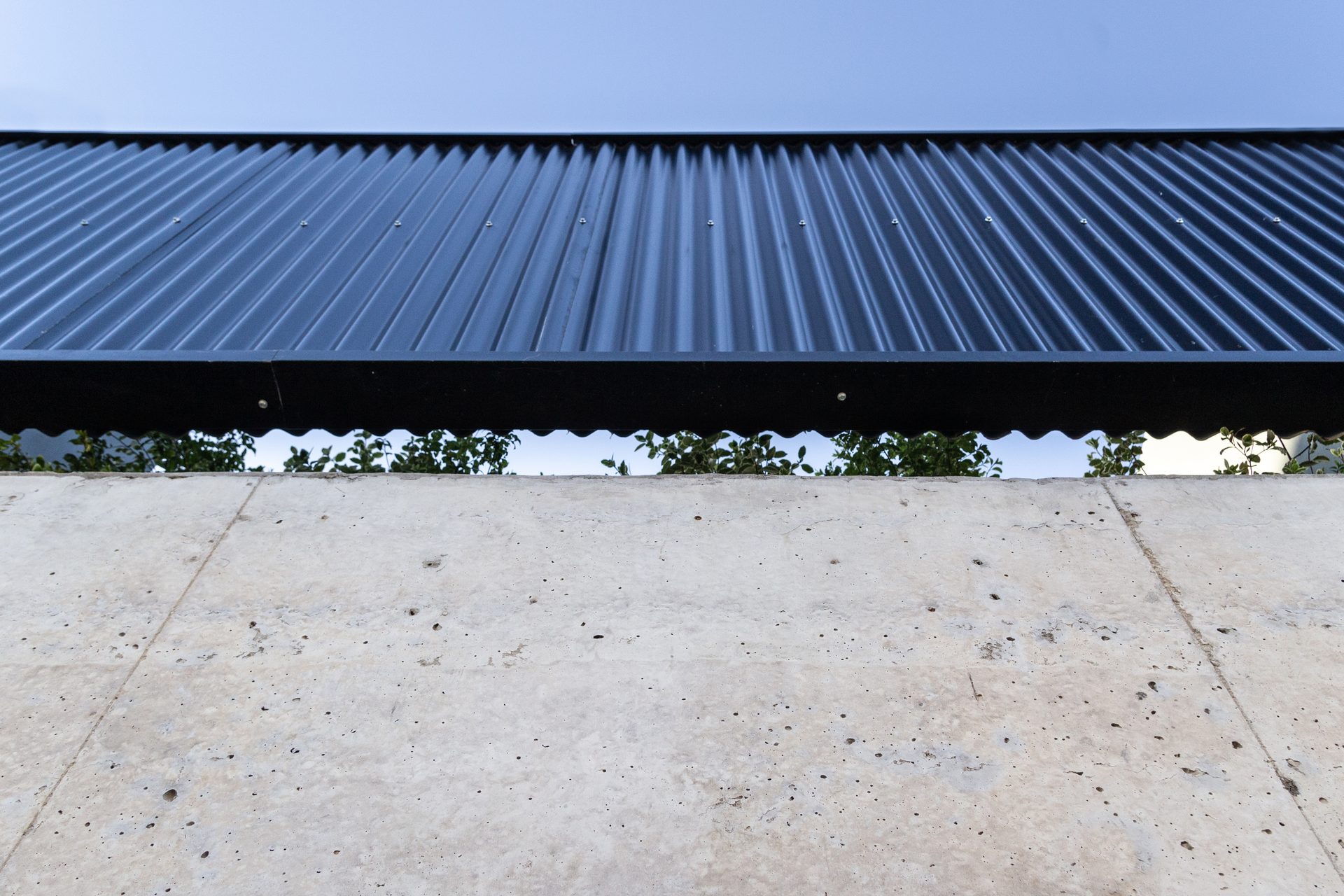
La planta alta se materializa con steel frame y un cerramiento pared - techo de chapa acanalada negra.
La materialidad reafirma la búsqueda de una imagen contemporánea.